Forecourt Württembergische Landesbibliothek - Boulevard, open Staircase und Space around Fitz-Faller-Fountain
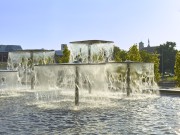
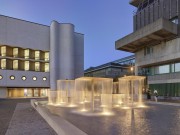
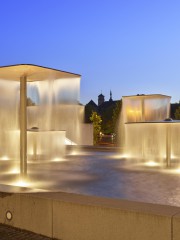
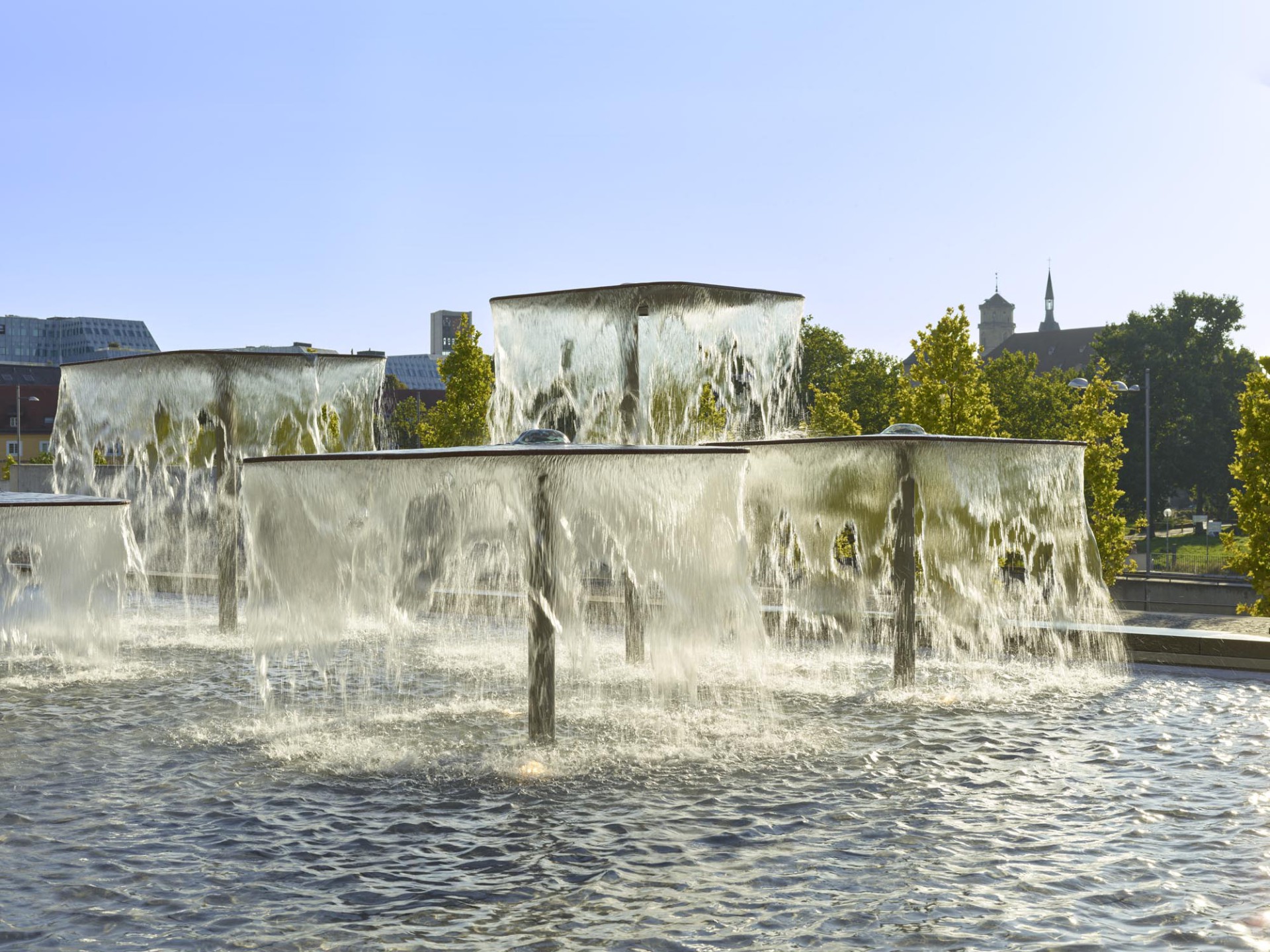
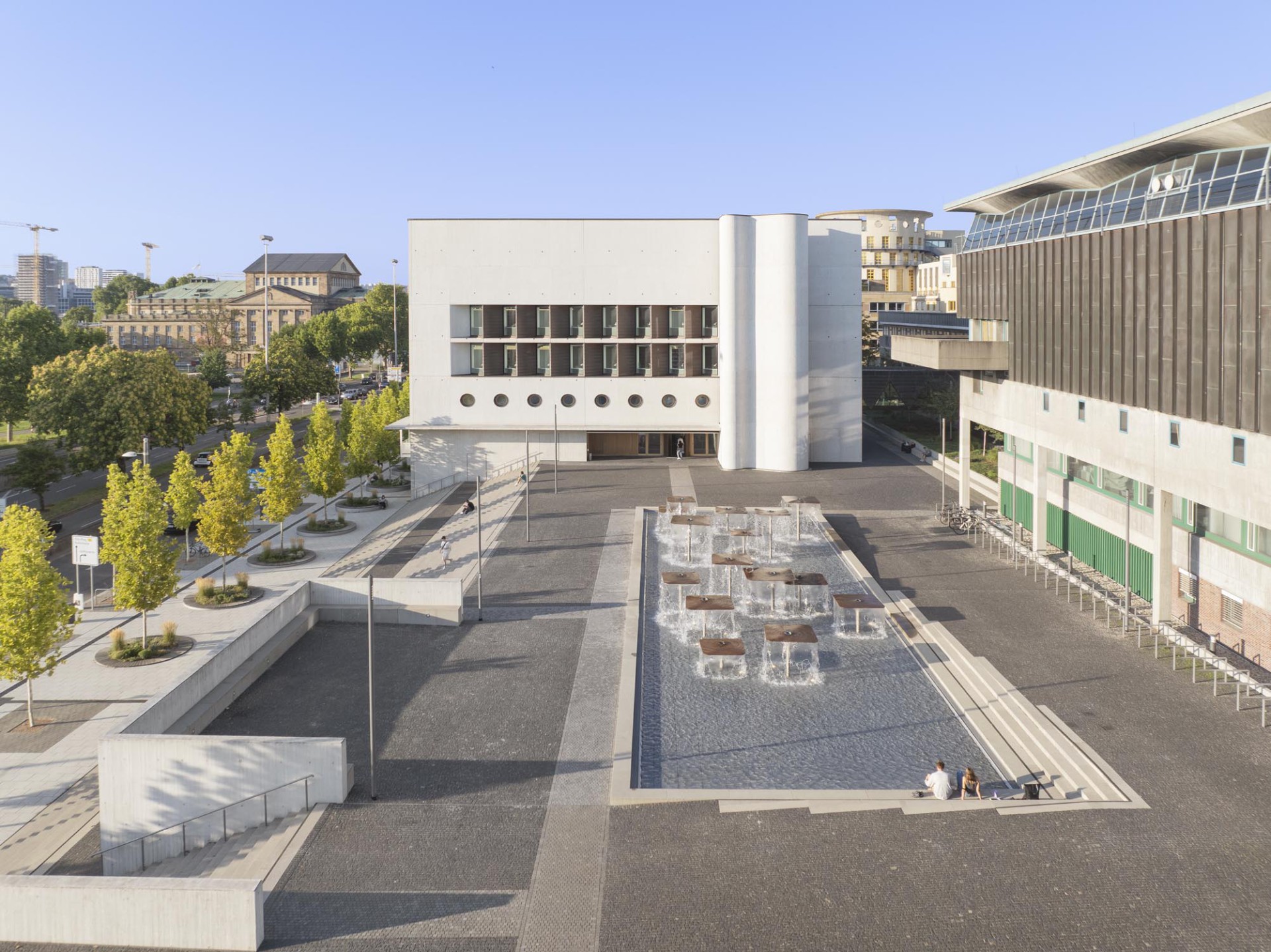
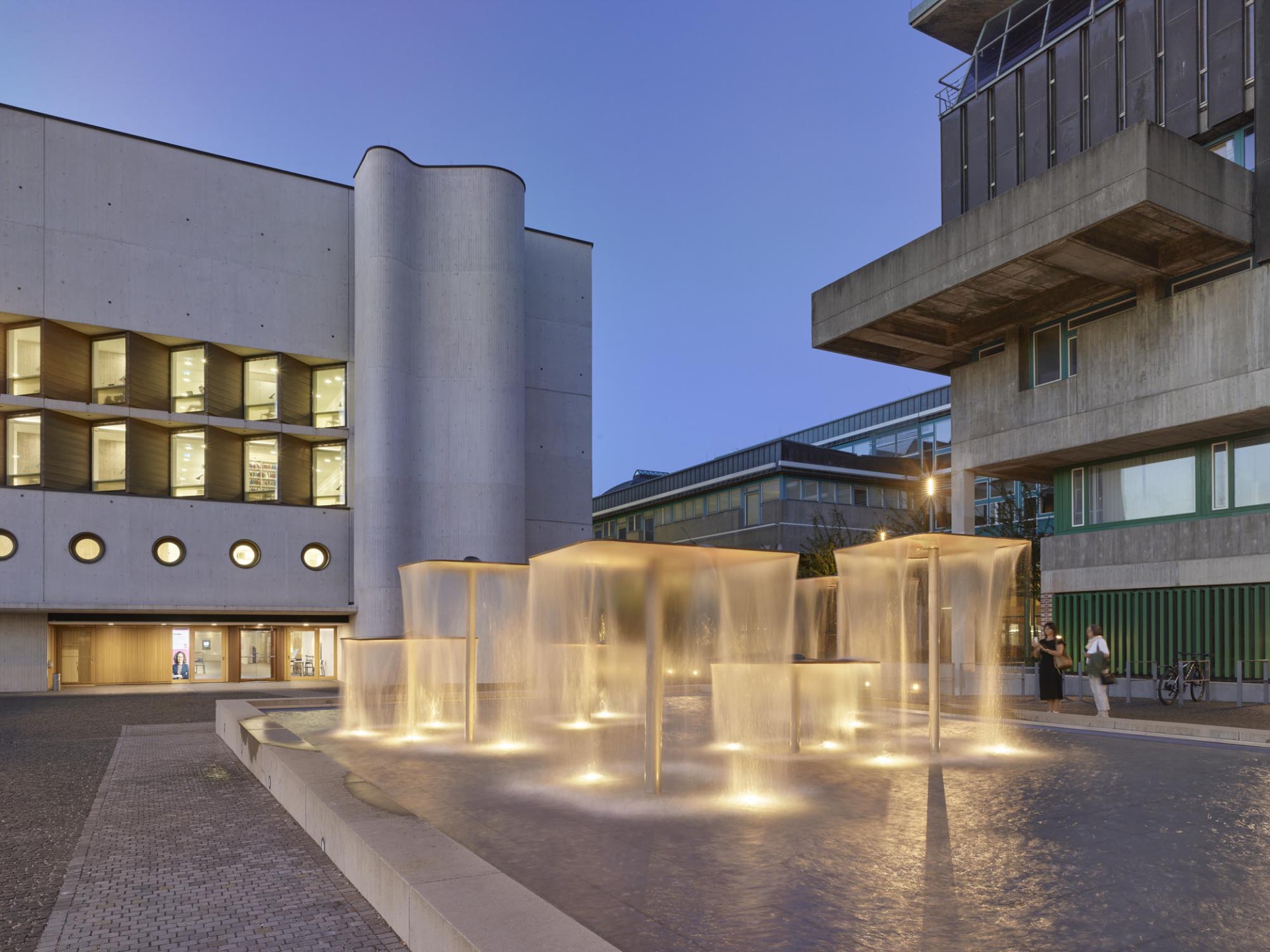
The inauguration of the Fitz-Faller fountain marks the preliminary completion of the urban design along the B14 road in the centre of Stuttgart. The space required for the S21 railway project had forced the fountain ensemble (architect: Peter Faller), designed in 1961 by sculptor Hanspeter Fitz (1929-1969), out of the central palace gardens. Restored and equipped with new technology, a piece of history has returned to Stuttgart's city centre.
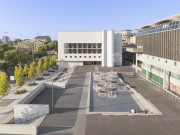
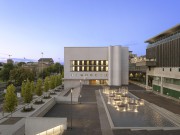
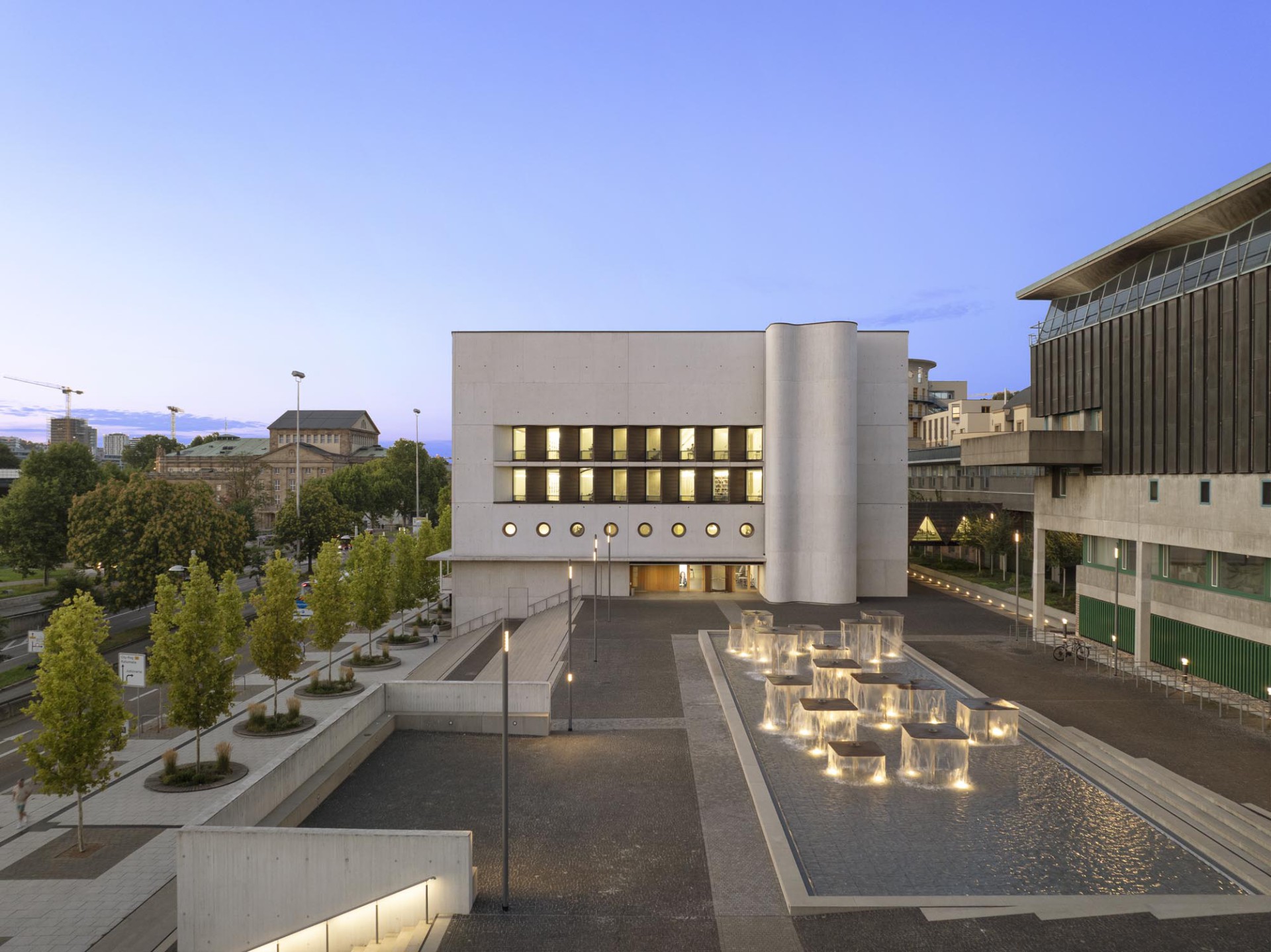
The fountain is the centrepiece of the ensemble of buildings housing the Main State Archives and the Württemberg State Library, and its freshness characterises the shared forecourt of the two institutions.
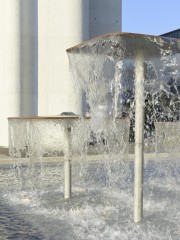
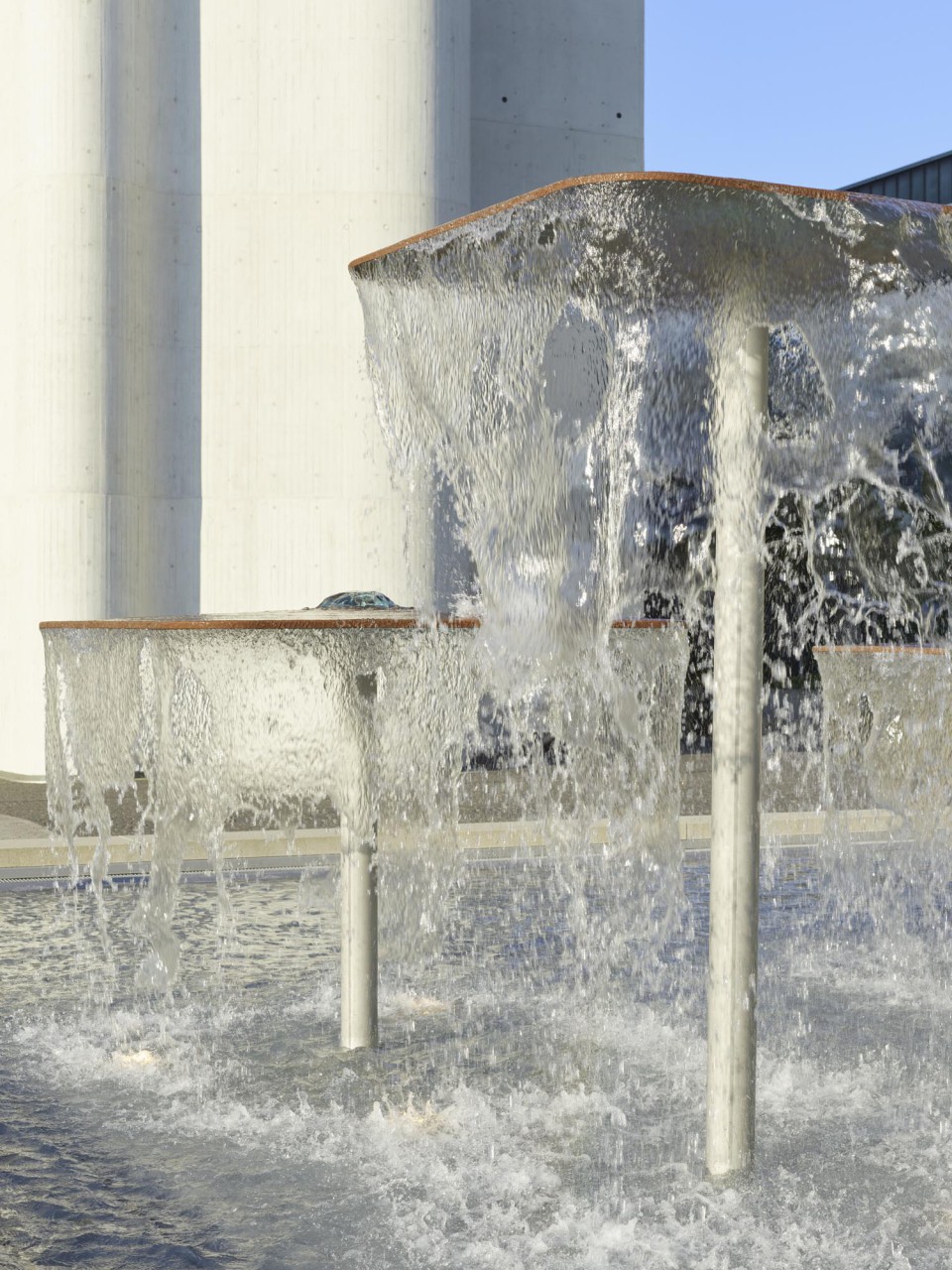
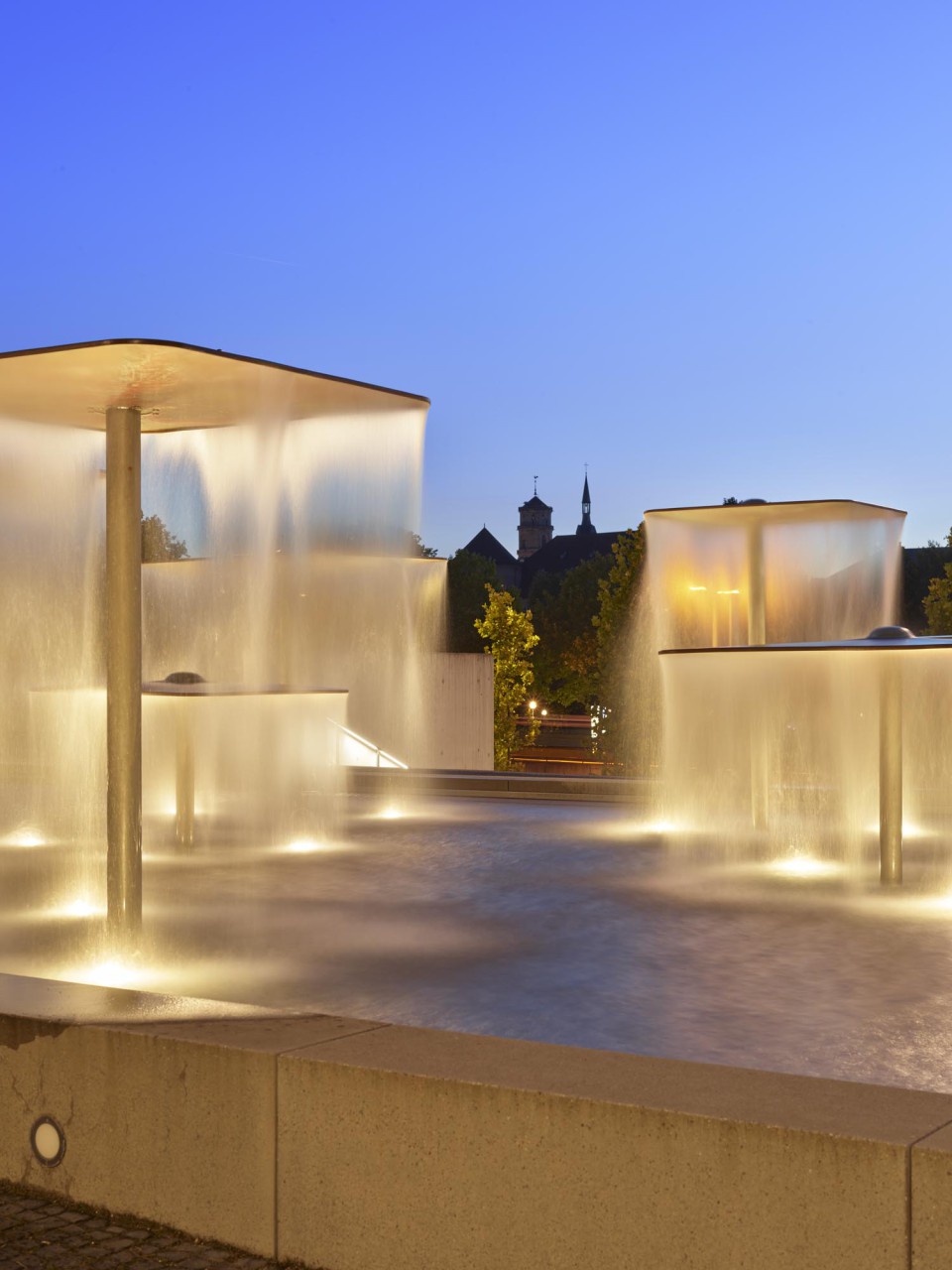
Hanspeter Fitz combined steel pipes with copper plates so that water flows out of the pipe openings and falls like a veil from the edges of the plates. This creates luminous walls of water that form transparent spaces. They unfold in a continuous vertical movement and react to every breath of air from the side. Added to this is the pleasant sound of water, which drowns out the noise of the busy main road and creates an acoustically sensual place with a high quality of stay between the cultural institutions.
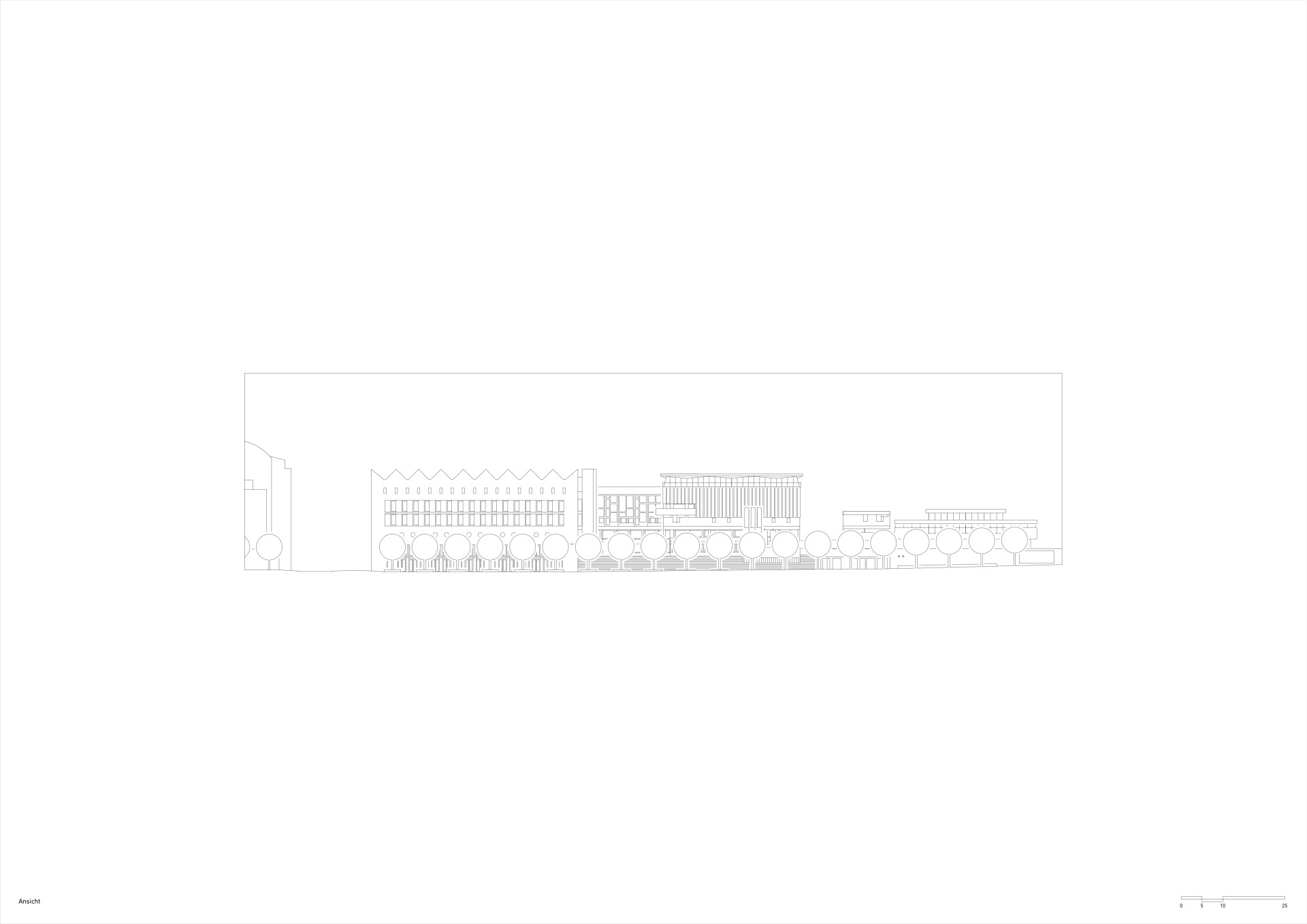
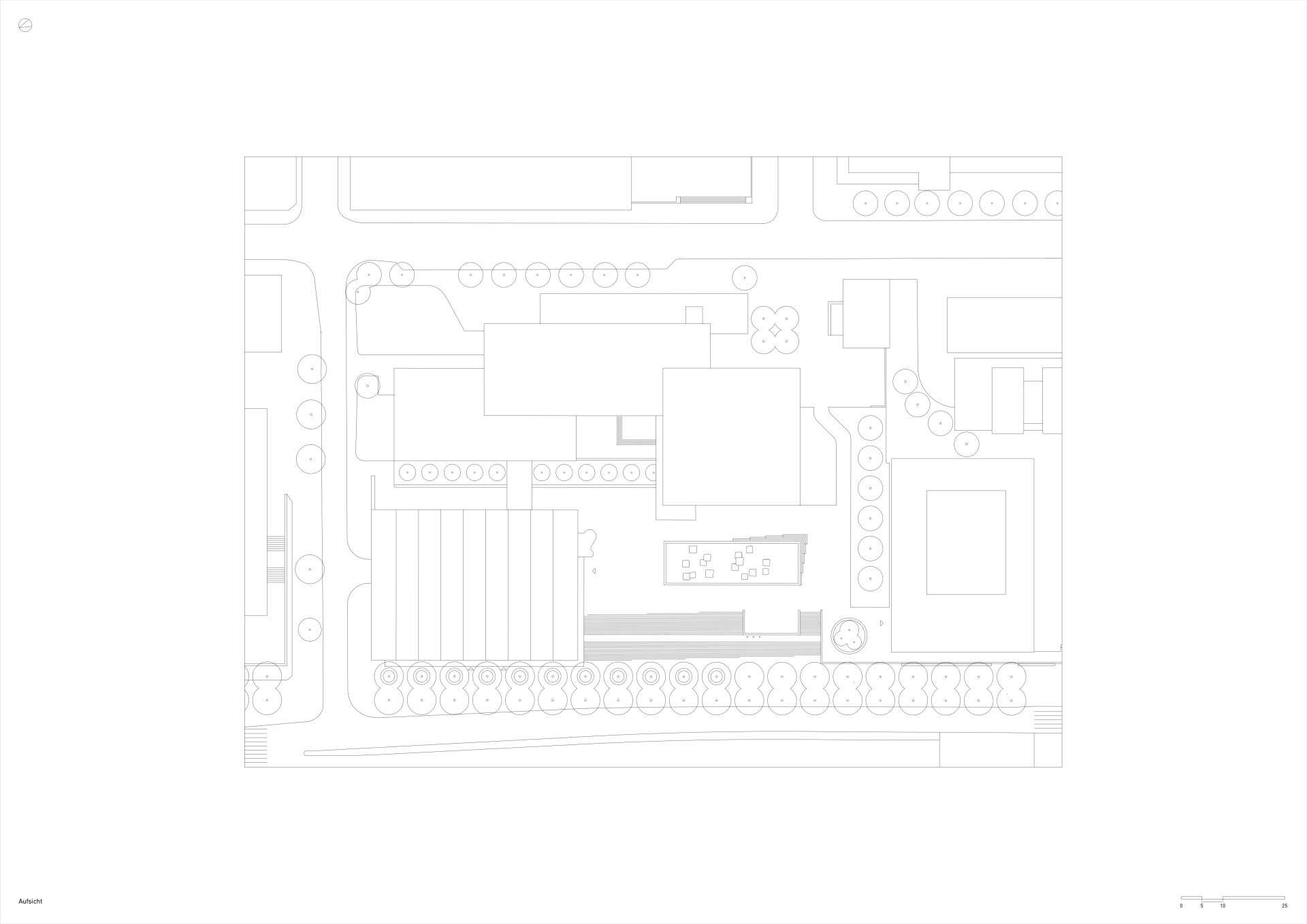
The fountain is part of the redesign of the Konrad-Adenauer-Straße along Stuttgart's ‘culture mile’, which has created new space for pedestrians and cyclists. Where underground parking entrances previously took up public space for motorised traffic, a new footpath now runs continuously from the Staatsgalerie to Charlottenplatz at street level.
Landscaped seating areas have been created, along with areas for outdoor dining, open staircases connecting different levels and access routes that are directly linked to the forecourt of the neighbouring city museum. All of these have been quickly embraced and thus function as popular gathering places.
With the aim of upgrading the heavily congested street space both ecologically and urbanistically, and above all of allowing the formerly structurally separated neighbourhoods to reunite, important urban axes were strengthened.
Cultural institutions can be accessed easily from the city centre and a wide range of barrier-free recreational areas was created.
The tree locations and habitats wrested from the inhospitable street space give a glimpse of the qualities that can be expected from the further redesign of the oversized street areas in the city centre.
Architects:
Lederer Ragnarsdóttir Oei / LRO GmbH & Co. KG, Stuttgart
Landscape Designer:
Helmut Hornstein, Überlingen
Well Construction:
Müller Service GmbH, Stuttgart
Renewal Waterplates:
Blechdesign GmbH, Markgröningen
Client:
Vermögen und Bau Baden-Württemberg, Stuttgart